What a Single Twin Does
One month after losing my twin, I'm learning that grief doesn't just break you. It rearranges you.

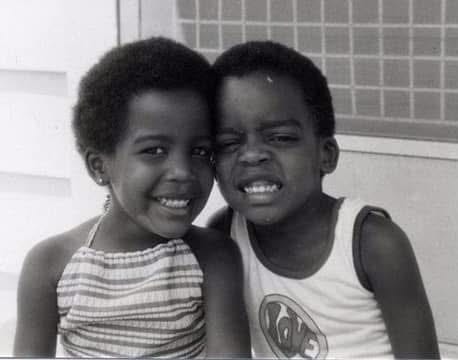
A month ago, I became something I never imagined I’d be: a single twin.
My brother Touré, my twin, my womb mate, born on the same day, into the same world, my first and longest companion, died on February 23rd. He was 55 years old. He served nearly 31 years in the United States Army, retired as a Master Sergeant, earned a Bronze Star, and kept serving as a civilian because that’s just who he was. He was a Kappa man, a legendary grillmaster (Breaker Bacon - IYKYK), a father, a husband, a son, a brother, and the kind of person who could look at a child and say, with a playful grin, “Are you safe at home?” and somehow make them laugh and feel completely seen at the same time. But before any of that, before the medals and the fraternity and the legendary grill sessions, he was my twin, and I was his.
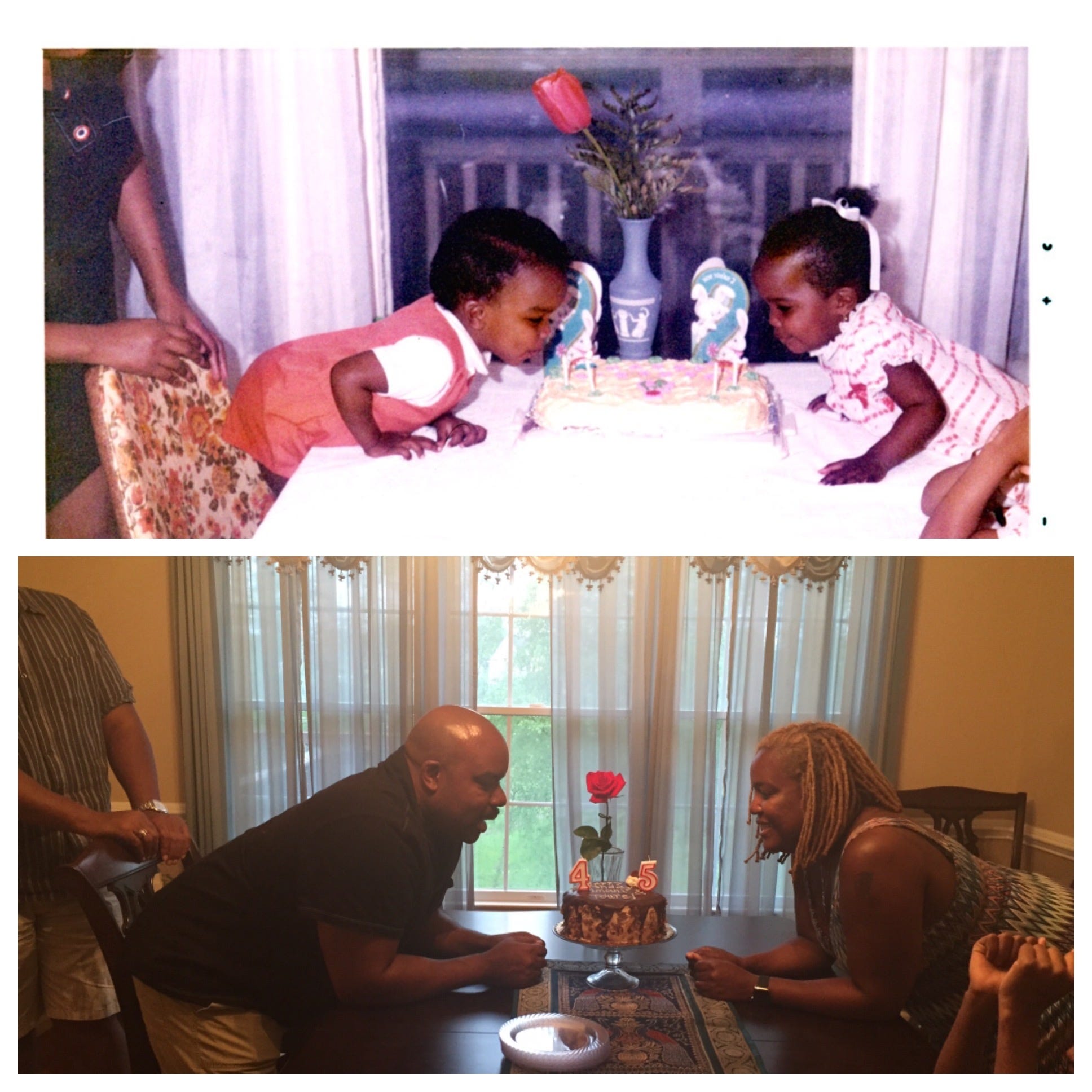
We were inseparable from the very beginning. When we were kids, the night before our birthday, we’d share a room and sing “Tomorrow” from Annie, just the two of us, counting down to another year together. If my godmother came to pick me up, I just assumed Touré was coming too, because that’s how it always was. As adults, we didn’t always celebrate together anymore because we had our own lives and our own traditions, but he was always there, still singing Tomorrow the day before our birthday. For as long as I can remember, growing up and all through my twenties and thirties, I held onto the fact that I was the older twin, and I said it proudly, every single chance I got. Then we turned 40, and Touré looked me dead in the face and said: “You’re older.” He’d been waiting our entire lives to flip that script on me, and I have to give it to him: he played the long game, and he won.
Our birthday is coming up in May, and it will be the first one I mark alone. I keep turning the question over in my head: what does a single twin do? I rationally know I’m still a twin, that doesn’t just stop being true, but I find myself wondering if there should be a new word or phrase for the living twin of a deceased twin. Does my name need an asterisk by it now? Imani Breaker*. I know the answer, I know I’m still a twin, I know that bond doesn’t break because one of us is gone. But knowing it and feeling it are two different things, and right now the knowing doesn’t feel like enough.
Someone sent me a small book after the funeral, Grief... Reminders for Healing by Gale Massey, and one page stopped me cold: “You may be disoriented, depressed and forgetful; these things are normal with grief and will pass.” I read that and I exhaled, because that is exactly what it is. Disoriented, like reaching for my phone to text him something funny and then remembering. Forgetful, and that one cuts especially deep because Touré was my memory keeper. He remembered the people, the stories, the little details I’d long forgotten, and when I lost him, I lost an entire archive of our shared life.
A friend wrote on a card: “You will never get over this, but I pray you can get through it.” I keep coming back to that distinction, because getting over it was never the goal, and getting through it is the actual work.
Grief, I’m learning, is not one feeling but a rotation that never quite announces what’s coming next. Sadness, then numbness, then a strange burst of energy where you reorganize an entire closet at midnight for no reason at all. Then laughter, real laughter, at a memory so vivid it doesn’t even feel like the past. Then guilt for laughing. Then someone you’ve never met reaches out to tell you that your brother was bragging about you to his friends, and you break all over again because you didn’t know, and now you’ll never be able to thank him for it.
I’m an executive coach, and my work is about helping people lead with clarity, with courage, with emotional intelligence. I thought I understood what all of that meant before February 23rd, but I didn’t, not fully. And I want to be clear that none of what I’m learning is new, because you’ve probably heard most of it before, and so had I, but there are some things you can only really receive when you’re already standing in the middle of them, and grief turned out to be one of those things for me.
In the weeks since Touré’s death, it has been the smallest things that carried me. The morning of the funeral, a friend sent a text reminding me to take deep breaths, and I cannot tell you how much I needed those words at that exact moment. People from my past, people I hadn’t seen in years, showed up on the day of the service, and just seeing their faces in the room was enough to keep me standing. Close friends stepped in to do things I simply couldn’t do for myself, not because I asked but because they saw what I needed before I could name it. The people who meant the most weren’t the ones who had the perfect words. They were the ones who just came, who sat with me, who sent a meal or a quiet text that said nothing more than “I’m here.” I used to coach leaders on the importance of presence, but now I understand it in my bones in a way I never could have explained from a framework or a textbook. You don’t need a speech to help someone who is hurting, you just need to be in the room.
Since his passing, Touré’s friends have found me, people I didn’t even know, people from every chapter of his nearly 31 years in the Army, reaching out to tell me how he talked about me, how proud he was of me. I wish I’d known sooner. It’s made me think about all the people walking around carrying quiet grief, quiet pride, quiet love they haven’t spoken out loud yet, and how we wait for funerals to say the things we should be saying at dinner.
I stood up in front of a funeral full of people and talked about singing show tunes as kids, about how he’d flip my jokes back on me, about how he had these little inside jokes with everyone he ever met. There was nothing strategic about it, I just told the truth about who he was. And afterward, person after person came up to me and said the same thing: “Thank you for letting us see him.” Grief has stripped away my interest in performing strength, and I’m finding that the real thing is so much more useful.
A friend’s note said, “May God give you strength, hope, and the ability to continue to see the light in all this darkness,” and I keep holding onto that word: continue. Because the light doesn’t disappear when someone you love dies. It just moves, and part of the work of grief is learning where it went.
Touré had this gift where, even on his hardest days, you could hear him laughing and offering comfort to someone else. He made everyone feel welcome, kids especially. He’d get down on their level, look them right in the eye, and make them feel like the most important person in the world. That is leadership to me now, not a title, not a strategy, just the simple act of saying: I see you, and you matter.
I’m not through the grief, I’m still very much in it, but I’m starting to see how it’s rearranging me in ways I couldn’t have predicted. It’s making me less patient with small talk and more patient with people, less interested in being impressive and more interested in being present, less afraid of saying “I don’t know” and more committed to showing up anyway.
So if someone in your life is grieving, I’d ask you not to wait for the right words, because there are no right words. Just show up, send the text, make the call, sit in the silence if that’s all you’ve got. And if you love someone, if you’re proud of someone, if they’ve made your life better in ways big or small, tell them now. Don’t wait for a program with their photo on the front.
I’m still figuring out what a single twin does, honestly, but I have this feeling that Touré already knew the answer, waited until exactly the right moment, looked me dead in the face, and decided not to tell me, because that is just who he was, and he always did love the long game. So in the spirit of that, I want him to know that I am going back to telling everyone I am the older twin, and I would genuinely love to see him try to stop me! He played the long game and I will give him every bit of that credit, but he left, and the floor is mine now, the title is mine, and I am going to say it loudly and proudly every single chance I get because there is nobody left who can look me in the face and flip it back on me. Now I’m playing the long game.
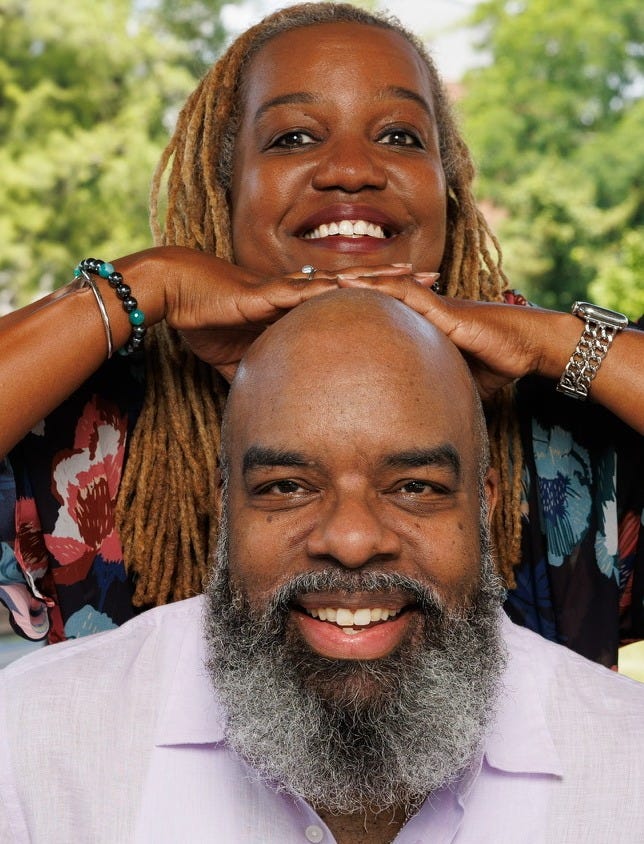
The sun will come out tomorrow, Twin.
This is my first Substack post. I’m writing because grief is teaching me things I didn’t expect, and I think some of those lessons belong out loud. I also want to tell his stories.
If this resonated, subscribe. There will be more.
This is your first post here, and you easily could have made it about who you are and what you do as a professional. Instead, you showed up raw and real. You can feel that. Such a brave way to make an entrance. Brava.
Beautifully written. Honest. Heartfelt. Heroine. ❤️