A Witness
Losing a twin means losing the one whose reaction to a thing became part of how you experienced the thing itself

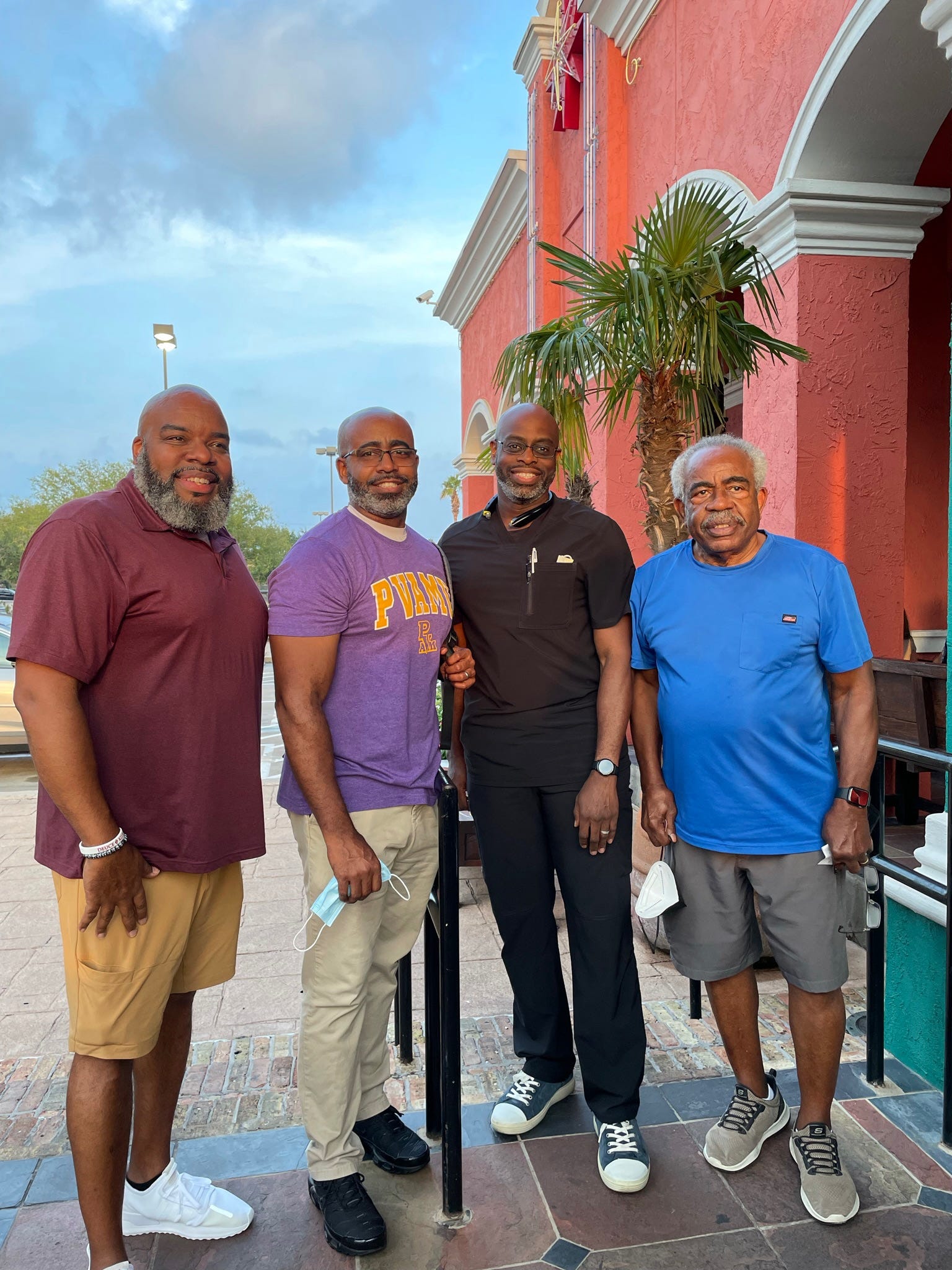
This week, we celebrated the life of my uncle, who died a little over a month after my twin, and I found myself asking a question I did not have an answer to yet: how do you grieve anew and help a parent grieve when you are still grieving yourself?
My dad is the last boy standing. He is one of six, the baby boy of three brothers and three sisters. He has now outlived every one of his brothers, which means he has arrived at that particular stage of aging where the people who knew you from the very beginning start to leave. There is nothing you can do but keep showing up to say goodbye and then keep living in the space they leave behind. He idolized his brothers, grew up sharing a bed with my uncle, and together with his sisters, they were the kind of close that only comes from a childhood spent in the same small world. Two of his sisters remain, and I am glad they have each other. His name was Nathaniel, and he served this country for 21 years, retiring as a Navy Chief Petty Officer. When they played Taps at his service, I allowed the emotion to envelop me, and it was in that moment that I began to truly understand what compounded grief feels like from the inside.
I watched my father choose to stand up and speak at his brother’s funeral, watched him walk to that podium carrying the weight of a man who had buried his son not quite two months earlier and was now burying his oldest brother. I sat in my seat holding both of those things at the same time, his loss and mine, the way you hold something fragile with both hands because one is not enough. His voice was shaky at first, and then the stories came and steadied him. I recognized that a story can carry the moment and allow those hearing it to live in the story with you. I have been learning since February that grief moves on its own schedule and without asking your permission, and the only thing you can do is pay attention to what it is showing you.
I did not want to be there. I want to be honest about that because I have been honest about everything else in these essays, and I am not going to stop now. Several times, I wanted to get up and leave, to walk out into the parking lot and just breathe air that was not weighted with flowers and loss and other people’s crying. I am emotionally tired in a way that is difficult to explain to someone who has not recently learned the geography of a loss so intimately that you recognize every landmark in the next one before you even have time to catch your breath. There is a particular kind of exhaustion that comes from grieving back-to-back, from being asked to find your footing in a new loss when the ground beneath your first one has not yet stopped shifting.
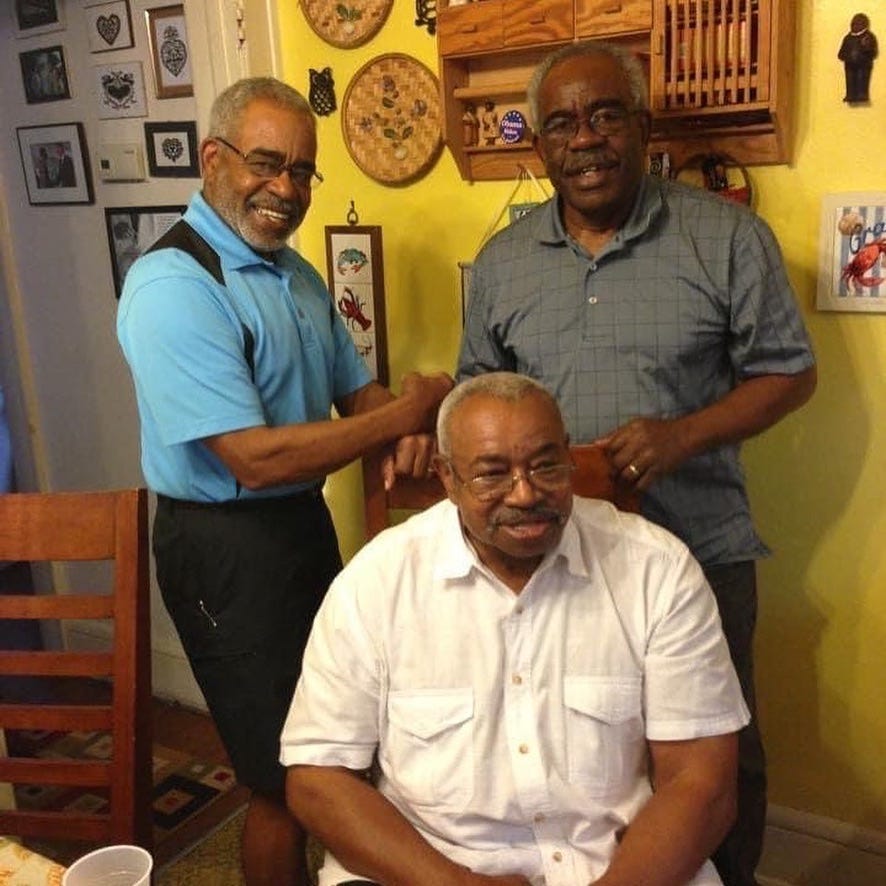
The lesson I carried out of that service is that grief does not wait until you are finished with your own before it asks something of you. I was still very much inside my loss when I was asked to show up for someone else’s, and I showed up anyway, not because I had healed or even come close to it, but because love does not check your emotional availability before it makes a demand on you. Sometimes presence is simply not fleeing when everything in you wants to run, staying in the room because the people you love need a body beside them, someone who understands what it feels like to be in that particular chair.
My baby cousins, musicians, played an original composition they had written, and it was beautiful and moving in the way that live music made by people you love can be. I was holding myself together just fine until I thought about Touré, about how much he would have loved it, and I could see his face in my mind reacting to it the way he reacted to things that genuinely moved him, that particular expression he had, the way his whole face would shift when something reached him, and that was the moment I stopped being the one who was holding it together and became, just for a few minutes, the one who needed to be held.
That is the other thing they do not tell you about compounded grief, that it does not always announce itself with the obvious things, that sometimes it finds you in a beautiful moment, in a piece of music that has nothing to do with your own loss and everything to do with it at the same time. You cry not only for the person in the casket but for the person who is not in the room and should have been, the person who would have leaned over and whispered something to you about how good that was, something specific and funny and exactly right the way only he could be, and you would have whispered back, and that small exchange between the two of you would have been its own private moment inside a room full of mourning. That is the thing about losing a twin that I keep running into from different directions: you do not just lose the person, you lose the witness, the one who was always in the room with you, the one whose reaction to a thing became part of how you experienced the thing itself. Now that whisper is just silence, and that particular silence turns out to be very loud. It finds you in the places you least expect it. Not just in your silent times or when you are alone, but also in the middle of something achingly beautiful.
When Touré died, my cousins showed up for me in the way that people show up when they love you and do not know what else to do, and they came and stayed and did the small things that turned out to be the large things. I received all of it from the unfamiliar place of someone who had just lost the person who had known her longest. I did not know then that I was storing it, that I was learning something about what it looks like to stand beside a person who is caught inside a cycle of loss. Then my uncle died, and I found myself on the other side of that exchange, in a room full of people I love who were hurting in a way I recognized, and I understood: this is what we do, and this is what this family has always done.
I have been asking since February what a single twin does, and I think I have been finding the answer in pieces across these essays without quite letting myself say it plainly, so I will say it now. A single twin does what her brother would have done, which is show up, stay in the room, carry the memories, tell the stories, and love the people who are still here.
I am not through the grief, and I want to be honest about that because I have been honest about everything else, and I am not going to wrap this up in some tidy little neat package. But I am learning that grief and living are not opposites, that you do not finish one before you begin the other, that you carry both at the same time the way my father carried the loss of his son into the funeral of his brother and still found a way to walk to that podium and memorialize him with stories and a shaky voice that steadied itself. That is not strength in the way we usually mean it. That is just love, doing the most demanding emotional work and showing up anyway.
My aunt, who just buried her husband, lost her own twin sister a few years ago, and as I hugged her, she was the one who comforted me, which is the kind of thing that happens when you are surrounded by people who have learned grief the hard way and kept going regardless. I told her I wanted to talk with her about how she has found a way to survive being a single twin, and we have not had that conversation yet, and I do not know exactly when we will. I am still crying, still grieving, still coming apart in the middle of ordinary conversations when something catches me off guard, and I have stopped apologizing for that or trying to time it better. This is what it looks like for me right now.
🙏🏻